"Truly global in its reach, yet local in its exacting particularities, Burning City breaks down the old familiar isms and genre divisions, introducing us to writings we've never seen before, printed side by side with our favorite poems by Huidobro and Musil, Mayakovsky and Mina Loy. In a nutshell, the map of modernism will never be the same!"
- Marjorie Perloff
"This wonderful anthology, unprecedented in its reach, at least delivers on the promise of global understanding of modernity. Anyone compelled by film, urbanism, poetry, and the technologies of travel and communication will be enthralled."
- John Wilkinson
"If the wind cries Mary sounds to you more like The ring pulsed maria then you have your ears tuned to Cronk's indiosyncratic sonics. You can't be overtly prepared for Cronk's directions, all you can do is gladly, if a little hesitantly, follow the paths her word combinations offer: Back to the city in chains............trees typewritering...........I am indeed a nurse. SKIN HORSE will stimulate some neurons to try some new actions, to scare up some gathering, to be thrilled to be amongst her magnifications."
- Dara Wier
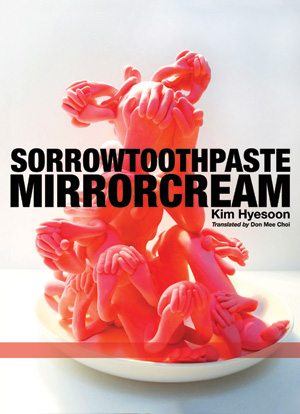
"Kim Hyesoon writes flowingly and choreographically a panorama of hovering hatelove for the birthing body, for cruelty and existence and for the expansive thinking and dizzyingly borderless universe-geography. Kim Hyesoon writes hatelove as a stone-hard feminist life-and-death dance. As garbage, love and death accumulate in her poems, your world will be changed for real!"
- Aase Berg
"Miraculous weaponry! Miraculous translations! This kind of undomesticated engagement and lawlessness and risk and defiance and somatic exorbitance posits a world and a relation to the world where everything excluded is included—the animal and the vegetal, the molten and the mineral, the gaseous and the liquid, not to mention shame, disgust, failure, terror, raunch. The final poem "Manhole Humanity" deserves its place alongside Césarire's "Notebook of a Return to the Native Land" or Ginsberg's "Howl" or Inger Christensen's It. Kim Hyesoon's new book is armament and salve, shield and medicinal chant. It's here to protect us"
- Christian Hawkey
"Already I buy it. I am confidant. I feel spokem for."
- Catherine Wagner
"The poems in Privado show how the drab style and the golden style go together."
- Aaron Kunin
"a storm is now upon us."
- Kevin Killian
"a word chain peppered with strange, colorful ciphers"
- Boston Review
"nutshell-autocracy"
- Perihelion
"a terrible loneliness lurks"
- Ploughshares
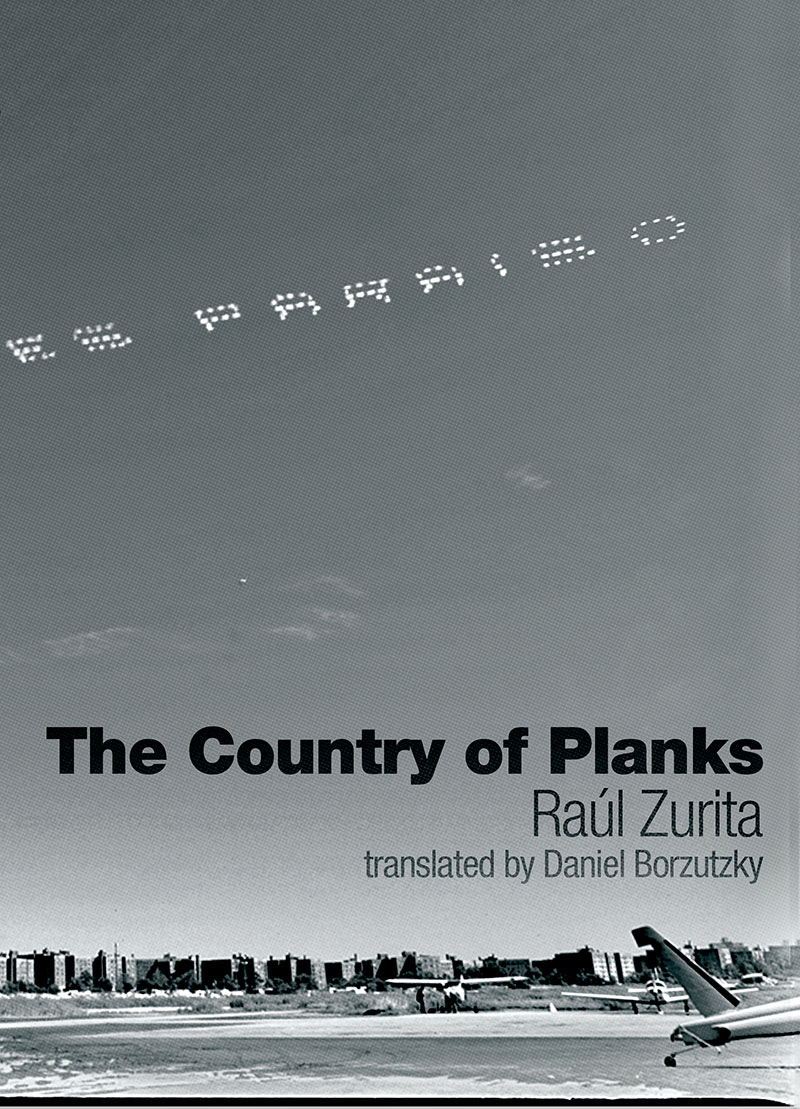
"Raúl Zurita is, with Nicanor Parra, Chile's preeminent living poet,and his "Canto a su amor desaparecido," here in Daniel Borzutzky's superb translation,is a shattering cyclotron of compact epic. Written in wake of the poet's experiences of imprisonment, torture, and underground resistance, Zurita offers, in the poem's opening half,stuttering, heart-wrenching testimonies of political and personal loss, followed by a tour de force sequence continental in scope-- a kind of Canto General "in negative," drained of any of the consoling teleologies. It is a brave work that conjoins the major and the minor, the vatic and the humblest--and most courageous--orders of the quotidian. Giving no quarter to abstract aesthetic, it's a poem whose traumas jolt us awake and demand we remember."
- Kent Johnson
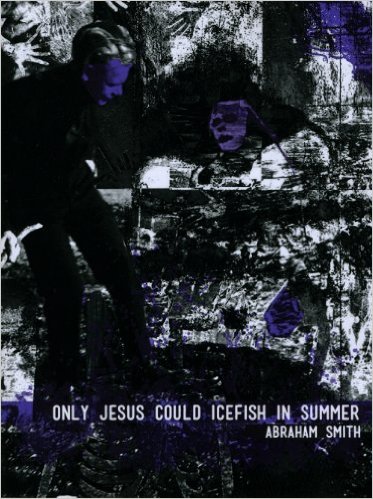
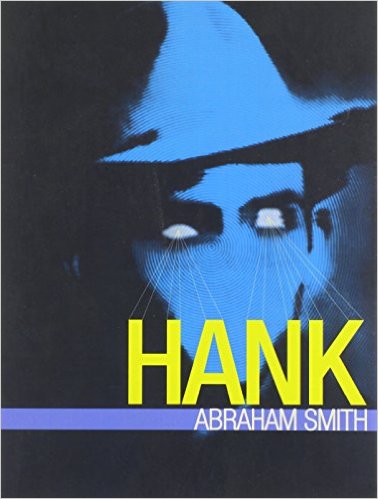
"In an era of overpolished workshop poems and vague, bloodless experiment, Abraham Smith's Hank risks a caterwauling quagmire both epic and lyric in scope, replete with 18 kinds of loneliness. A folk paen to Hank Williams, Sr., its excess is astonishing, its unpunctuated, puncturing burble is propulsive, funny, unforgiving , and raw. Hank is an "elegy for gravel" along the lost highway we've been hunting for. It belongs only to the future of American poetry."
- Joshua Marie Wilkinson
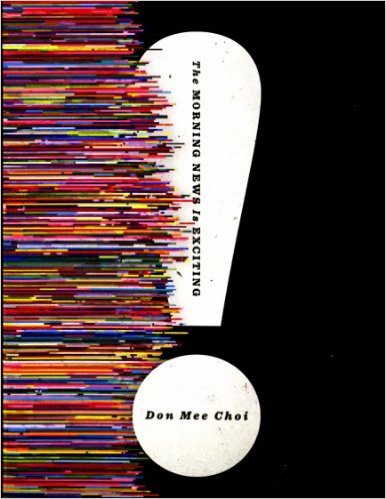
"Cameraman, run to my twin twin zone. A girl's exile excels beyond excess. Essence excels exile. Something happens to the wanted girl. Nothing happens to the unwanted girl. The morning news is exciting." A debut volume from poet, translator, artist and activist Don Mee Choi. Here translation, aberration, mobility and movement corrupt the would-be verities of the world's hegemonic codes. "Choi translates feminist politics into an experimental poetry that demilitarizes, deconstructs, and decolonizes any master narrative."
- Craig Santos Perez
"A Journey from Neocolony to Colony" (in Action,Yes)
In the shell the nerves' thin ghost clears time for fat it will take many thousand years to raise fat
- from Transfer Fat
Gunnar Björling's singular and independent language and rhythm has influenced generations of Swedish poets. These are overjoyous, unnatural and crazed poems. To read Björling is to eat language.
- Aase Berg
Fredrik Hertzberg's revelatory translations make palpable the syntactically sprung, emotion-rent verse of one of the great Scandinavian Modernist poets. Hovering in an aesthetic space somewhere between Dickinson and Celan, Oppen and Creeley, Gunnar Björling is a poet of the everyday and its words, as if the abyss between souls could ever be ordinary or ever anything else
- Charles Bernstein
Du gar de ord, the last collection of poems by the great Finland-Swedish Modernist poet Gunnar Björling, here superbly translated and introduced by Fredrik Hertzberg, is a milestone in the annals of experimental poetics produced in our century. Björling's lyric is one of extreme reduction and syntactic dislocation: "Cut out, cut / you, your word/ cut our your / contour, that you cannot /explain," wrote this poet in 1938, insisting that every word, indeed every morpheme and letter count in a densely Heideggerian poetry of being. Like his American counterparts George Oppen and Robert Creeley, Björling prefers the "small words" – if, and, as, that, like you, the, it–; like theirs, his "minimalism" is conceptually and erotically charged. Reading You go the words is a great pleasure
- Marjorie Perloff
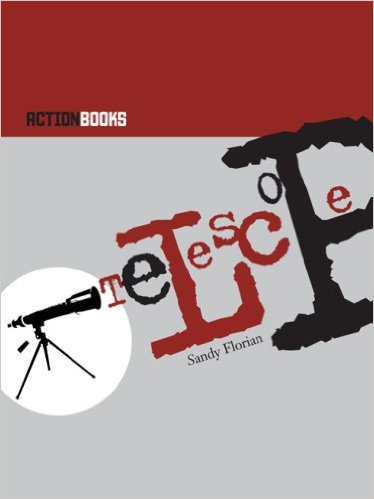
In her marvelous debut, Sandy Florian tackles the "clang and bang" of our inattention with a linguistic instrument so fine the pages appear to have been etched. Think Dürer offering up the bits and achingly rich pieces of his Melencolia I, or Schongauer filling the air with his intricate demons. Through the unfurling of its "ellipses and et ceteras," its "ostinato poundings," its "serrated anima," Telescope will teach your eyes something new.
- Laird Hunt
A wondrous book, filled at every turn with pleasures and astonishments. It makes one love the world all over again.
- Carole Maso
"Beastly I fall at Adam under the shade." Sandy Florian's second book dilates under Milton's Forbidden Tree, plumbing God's unjustifiable ways, and Man's. In a world made from scratch, eros and artifice, thanatos and theology give off mixed and exquisite signals, here buckled in Florian's bejeweled and rigorous sentences: "words like chords like emerald snakes, words like lords like humble smoke." Florian's intellect blazes in this bold, ambitious work: "I have a war with history."
I slit the throats of the Choirboys of Anguish ::
I set the flocks of Emergency free ::
- from ::Out of the Coffin I Leap:
Go through the window and you become an animal
and are so happy to lie in your little round bed, stuffed with cedar
- from "Shirley Temple, Black
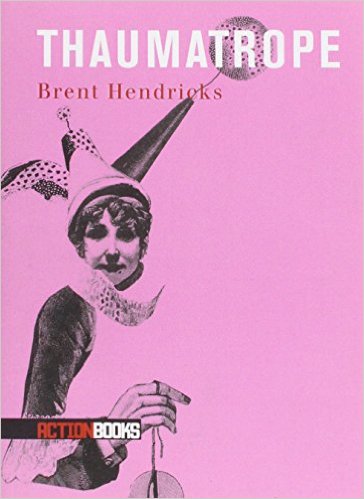
Dear Reader: This wonderful book you hold in your hands (are those your hands?) holds your fortune.
- Gillian Conoley
Ante up. Brent Hendricks's Thaumatrope works like an ideogram thrown by a cardsharp, a decapitated allegory set in "the golden age of little bars.
- Daniel Tiffany
In these recent poems—published in 2001 in Chile— Huenún invents a setting influenced by Melville's vivid scenarios, Coleridge's languid morbidity, and George Trakl's silences and darkening seas. Borzutzky's English version is as haunted, brooding, and terrific as the original.
- Forrest Gander
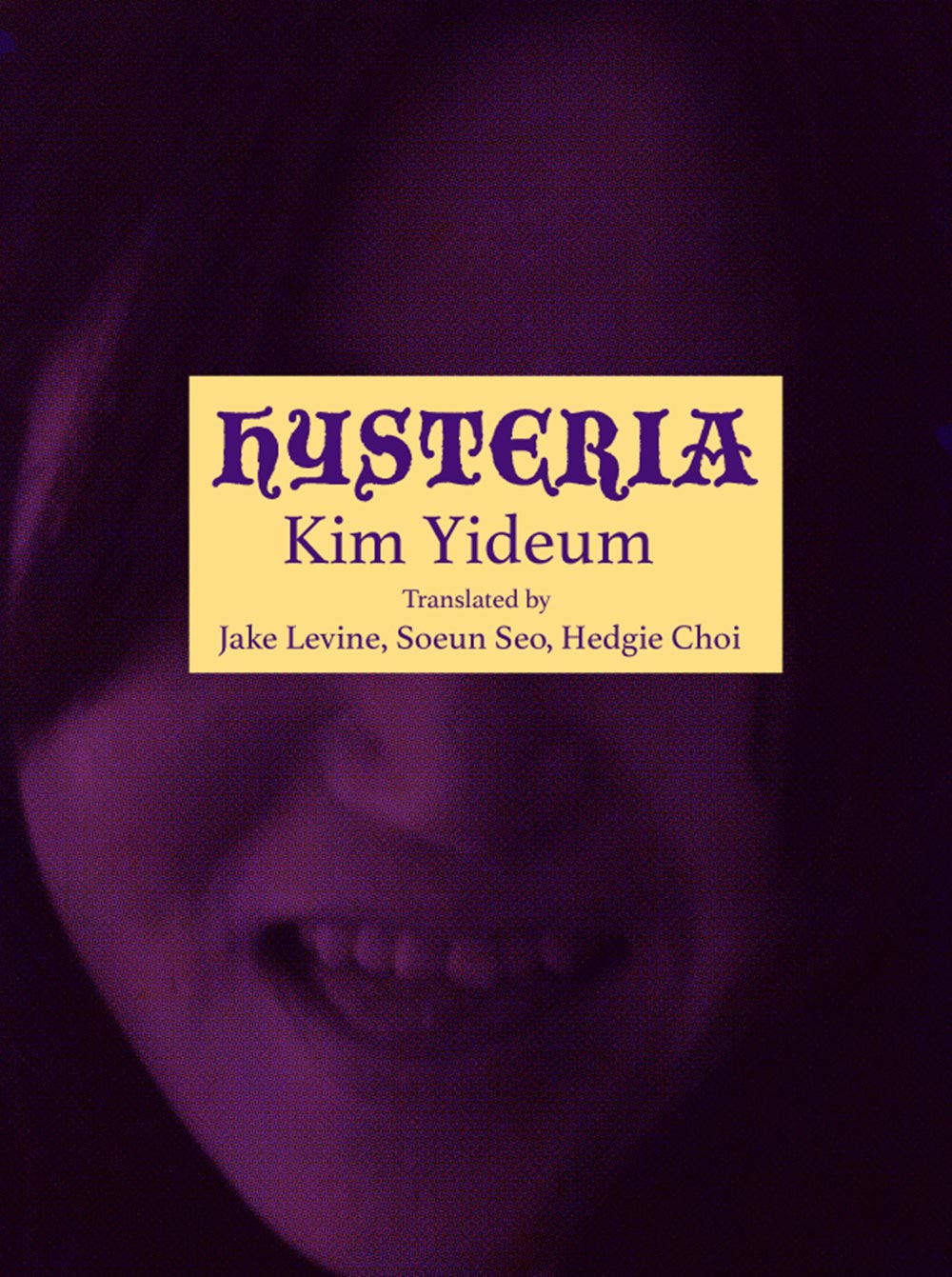
"by far the most imaginative poet in Korea today"
- Bruce Fulton
"Kim's animals, like her implicit human subjects, exist within a "book of pain," victims of violence from without and within. Bodies fail to protect, and there is no protection from bodies themselves […] These dark allegories are beautifully rendered by Don Mee Choi, herself a fine poet."

- Susan Schultz
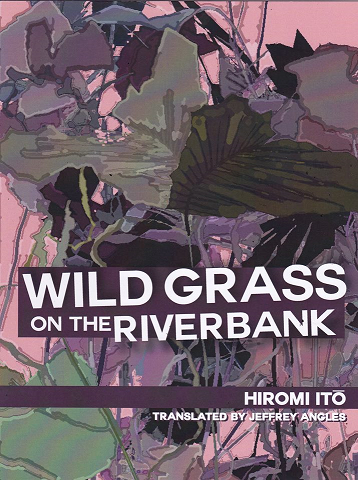
"KILLING KANOKO is a powerful, long-overdue collection (in finetranslation) of poetry from the radical Japanese feminist poet, HiromiIto. Her poems reverberate with sexual candor, the exigencies anddelights of the paradoxically restless/rooted female body, and the visceral imagery of childbirth leap off the page as performative modal structures--fierce, witty, and vibrant. Hiromi is a true sister of the Beats."
- Anne Waldman
"you are a little bit happier than i am has the energy and oddness of a thing that is rising very fast that is not supposed to be rising, or that is supposed to be rising but for a moment you forget that, and for a moment this ordinary thing looks very strange and exciting."
- Deb Olin Unferth
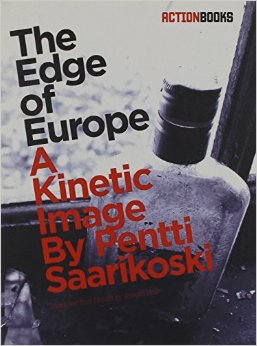
In the mid-to-late seventies, Saarikoski had withdrawn from the limelight of two decades of being an only too enthusiastic big fish in a small pond. With his partner, Norwegian-Swedish writer Mia Berner, he established himself in an old house on an island just off the west coast of Sweden and cultivated his own backyard in a typically troll-like way, superimposing the rich and various, wild and woolly landscape of his mind on the surrounding countryside with its mountain ridges, petroglyphs, caves, and harbors. Travels along the western "edge of Europe" with sojourns in Stavanger, Norway, Brittany, and Dublin frame his meditations on language(s), places, animals, humans (and their male and female tyrants) in rambling tongue-in-cheek or deadly serious but never earnest prose.
- Anselm Hollo, from the Introduction
Anselm Hollo's translation makes this fluid novel read as though it were written by one of the finest poets in English, not just Finnish, telling a story in language that surprises not just line by line, but often from the start of one sentence to its end, as it effortlessly sweeps across literature, architecture, rusted cars, trees, nations, beer, history, jogging-life-until it finally, in the finest sense of Ulysses, brings us home again.
- Steve Tomasula, author of The Book of Portraiture
If Frank Stanford got up from the dead to slam (and slammed to win), what he would say might well resemble the poems in whim man mammon.
- Graham Fous
Mash Gertrude Stein with agrarian folk and you have the unholy matrimony of Abraham Smith's debut, "Whim Man Mammon."
- Cathy Park Hong
Readers beware. You are about to go into the lion's den. […]There's no room for nonsense: Solórzano seems to have no interest in dazzling the reader with her prodigious linguistic performance or her defiance of challenging self-imposed constraints. Her diction is unerringly original yet it is also continues the often forgotten legacy of some of the masters of the Latin American historical avant-garde such as Oliverio Girondo, from Argentina, and the Mexican Xavier Villaurritia. How fortunate is she to have her poems be in the hands of Jen Hofer, as judicious a translator as anyone would ever hope for. Her account of the never-ending process of translation evinces just how much thought goes into every one of her choices. And how fortunate are we: she's been brave and generous enough to venture into the lion's den just for the sake of sharing this striking work with English-language readers.
- Mónica de la Torre